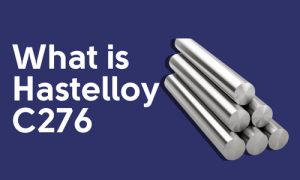

Hastelloy is a high-performance nickel-based alloy. It helps engineers and project managers during difficult times. It belongs to the super-alloy family because it stays strong and keeps its shape even when temperatures go up or chemicals try to wear it. The alloy has good corrosion resistance and mechanical strength, which keeps the machine running. We see a massive growth in the demand for Hastelloy Round Bars because modern industries operate in more aggressive environments than ever before. These bars are now essential for critical projects.
What Are Hastelloy Round Bars?
Hastelloy Round Bars are solid metal rods made primarily from nickel, molybdenum, and chromium. We manufacture them using a careful melting process followed by hot rolling or cold drawing to get the exact shape needed. These bars have physical and mechanical traits that put them in a different league compared to basic stainless steels or even some other nickel alloys. They handle pressure better. They stay solid under heat that would melt or warp cheaper metals. These bars are the backbone of high-stress components.
Key Properties That Make Hastelloy Round Bars Exceptional
Hastelloy round bars stand out due to their:
- Corrosion Resistance: Exceptional resistance to acids, oxidizing agents, and stress corrosion cracking.
- High-Temperature Strength: Maintains mechanical integrity at elevated temperatures where most metals fail.
- Fabricability & Weldability: Easily formed and welded into complex components without compromising performance.
- Reliability in Harsh Environments: Ideal for chemical, petrochemical, and marine applications.
These properties make Hastelloy bars a preferred choice where long-term durability and operational safety are critical.
Detailed Guide to Common Grades of Hastelloy Round Bars
Choosing the right grade is vital because each one has a specific advantage based on its chemical composition.
Hastelloy C-276 (UNS N10276) – Versatile Corrosion Resistance
The Hastelloy C276 round bar is arguably the most versatile grade available in the market today. It consists of 57% nickel, 15-17% molybdenum, 14.5-16.5% chromium, and other elements. The high amounts of molybdenum give it a massive advantage in resisting local corrosion like pitting and crevice corrosion. This grade performs well in chemical processing and pollution control systems exposed to wet chlorine gas, hypochlorite, or chlorine dioxide.
Hastelloy C-22 – High Resistance in Oxidizing and Reducing Environments
Hastelloy C-22 is often seen as a step up from C-276 in specific environments. It has a better balance of chromium (20-22.5%), molybdenum (12.5-14.5%), and tungsten (2.5-3.5%). This combination provides enhanced resistance to pitting and crevice corrosion, especially in oxidising aqueous media. We often supply this grade for use in pharmaceutical manufacturing and complex wastewater treatment systems. It handles the harsh cleaning chemicals used in drug production without shedding metal particles into the product.
Hastelloy X Round Bars – High-Temperature Strength
Hastelloy X Round Bars are the preferred choice for high-temperature strength. This grade is not just about resisting acid; it is about surviving the fire. It has a high resistance to oxidation at temperatures up to 1200°C. Because of this, it plays a huge role in aerospace engineering and gas turbine components. It is also used in structural parts of industrial furnaces. It won’t deform even after long hours of heat exposure.
Hastelloy C2000 Round Bar – Balanced Corrosion Performance
The Hastelloy C2000 Round Bar is a unique metal because of the addition of copper to the nickel-chromium-molybdenum composition. This small change makes it incredibly versatile. It can handle both oxidising and reducing environments equally well. Most alloys are good at one or the other, but C2000 handles both. This makes it a suitable choice for chemical plants that switch between different types of chemical reactions in the same equipment.
Hastelloy B-2 and B-3 – Reducing Acid Resistance
These grades are the specialists of the Hastelloy family. They provide superior resistance to hydrochloric acid at all concentrations and temperatures. You will find them in chemical reactors and heat exchangers where other metals would dissolve in minutes. B-3 is a newer version that has better thermal stability than B-2, making it easier to work with during the fabrication process.
Industrial Applications of Hastelloy Round Bars Across Sectors
Hastelloy round bars are widely used in industries where corrosion, heat, and mechanical stress are concerns:
- Chemical & Petrochemical Plants: Valves, shafts, fasteners, and reactors.
- Oil & Gas Industry: Offshore rigs, platforms, and equipment exposed to saltwater.
- Power Generation: Nuclear and thermal power plants, cooling systems, and turbines.
- Aerospace & Marine: Engine components, propeller shafts, and high-temperature structural parts.
- Other Sectors: Food processing, paper mills, and fertilizer production.
How to Choose the Right Hastelloy Grade for Your Needs
Selecting the correct grade requires consideration of:
- Corrosion Type & Severity: Acidic, oxidizing, or mixed environments.
- Operating Temperature: Some grades excel at ambient temperatures, others at elevated temperatures.
- Mechanical Load: Strength requirements under pressure or stress.
- Fabrication Needs: Ease of welding and forming for your application.
- Cost vs. Service Life: While more expensive than steel, Hastelloy often provides longer operational life and lower maintenance costs.
Quality Standards and Testing Requirements for Hastelloy Round Bars
Every bar we provide must meet strict ASTM and ASME standards. This ensures that the specifications of the metal match the certificate. We put the material through mechanical testing, chemical analysis, and non-destructive testing like ultrasonic scans. This catches any hidden gaps or cracks inside the metal. Sourcing from certified suppliers is the only way to be sure that your project won’t fail because of poor material quality.
Conclusion: Ensuring Industrial Success with the Right Hastelloy Round Bars
Choosing the right Hastelloy grade ensures equipment longevity, operational efficiency, and safety in aggressive industrial environments. From high-temperature aerospace applications to corrosive chemical processing, grades like C-276, C-22, X, and B-3 provide unmatched reliability. Partnering with trusted suppliers guarantees access to quality-certified material, ensuring your project succeeds with minimal downtime and maintenance. These alloys provide the reliability, safety, and efficiency that modern industry demands. Robust Special Metals is ready to help you find the perfect material for your next big project. If you need a quote or technical advice, please contact us today.
FAQs
1. Which Hastelloy grade is best for chemical processing applications?
Hastelloy C-276 is the most versatile and widely used grade for chemical processing due to its excellent corrosion resistance.
2. Can Hastelloy round bars withstand high temperatures?
Yes, grades like Hastelloy X maintain strength and oxidation resistance at temperatures up to 1200°C.
3. What industries commonly use Hastelloy round bars?
Chemical processing, petrochemical, power generation, aerospace, marine, food processing, and fertilizer production.
4. How does Hastelloy C‑276 compare to C‑22 in terms of corrosion resistance?
C-22 offers enhanced resistance in both oxidizing and reducing environments, while C-276 is highly versatile in general chemical resistance.
Are Hastelloy round bars suitable for marine environments?
Yes, their excellent resistance to saltwater corrosion makes them ideal for marine applications.